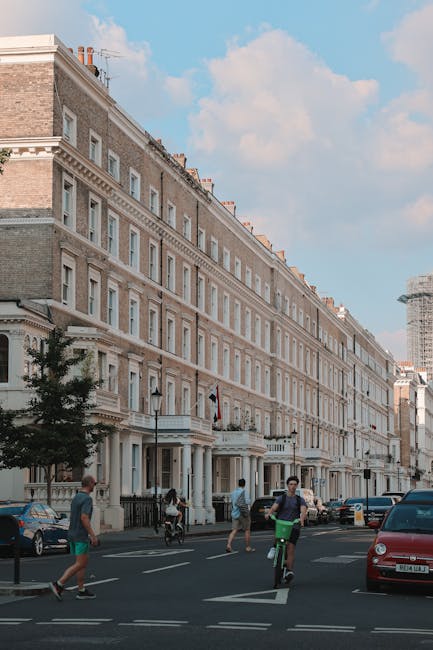
Access issues for basement flats in South Kensington cleaning jobs

Basement flats can be brilliant to clean properly: cosy, compact, often beautifully finished, and sometimes hiding the kind of dust and damp corners that only show up once you get in there. But let's face it, access issues for basement flats in South Kensington cleaning jobs can turn a straightforward booking into a bit of a puzzle. Narrow steps, awkward door codes, low light, shared entrances, parking pressure, and "just pop round the back" instructions that are anything but simple - these are the sorts of details that matter in real life.
This guide breaks down what access challenges usually look like, why they matter, how to plan around them, and how to avoid the common headaches that waste time on the day. If you manage domestic cleaning, deep cleans, end of tenancy work, or even a one-off cleaning visit, you'll find practical, local-minded advice here. And yes, a calmer clean is usually possible - even in the trickier basement properties.
- Why access issues matter
- How basement-flat access works in practice
- Key benefits of planning access properly
- Who this is for
- Step-by-step guidance
- Expert tips for better results
- Common mistakes to avoid
- Tools, resources and recommendations
- Law, compliance and best practice
- Options and comparison
- Real-world example
- Practical checklist
- Conclusion
- Frequently asked questions
Why Access issues for basement flats in South Kensington cleaning jobs Matters
Access sounds like a small detail until it becomes the thing that dictates the whole visit. In basement flats, the cleaner may not be dealing with a standard front-door entry and a bright hallway. Instead, there might be steep steps, a side gate that sticks, a buzzer that only works from one angle, or a building manager who expects advance notice. That's before you even get to the cleaning itself.
South Kensington has a lot of period properties, mansion blocks, mews-style layouts, and converted buildings. Beautiful, yes. Convenient for a cleaning job? Sometimes. The challenge is that basement flats often combine limited natural light, tight access routes, and shared building rules. If those are not understood before arrival, a cleaner can lose time carrying equipment, searching for the correct entrance, or waiting outside while someone hunts for keys.
Why does that matter so much? Because cleaning is time-sensitive. A delayed start can affect the whole schedule, especially for services like end of tenancy cleaning, move-in cleaning, or move-out cleaning. If access is unclear, the job may need to be shortened, rescheduled, or re-priced. Nobody wants that awkward conversation at the front gate at 9:15 in the morning, with everyone slightly flustered.
How Access issues for basement flats in South Kensington cleaning jobs Works
In practice, access issues are usually less about one single obstacle and more about a chain of small friction points. A basement flat might require entry through a communal hallway, then down a narrow staircase, then through a back passage, then through a separate door that needs a code. Or the clean may be straightforward once inside, but getting vacuum, mop bucket, microfiber kit, and any specialist products down the steps is the real challenge.
Here's the typical flow. First, the cleaner or client confirms how entry works. Then the building layout is checked: street door, communal area, basement steps, and any restrictions on parking or loading. After that, practical details are set out - who opens the door, whether somebody must be present, whether keys are collected, and where equipment can be placed while working.
That sounds simple. It often isn't. To be fair, the issue isn't usually the flat itself. It's the logistics around it. One common example: a cleaner arrives for a domestic cleaning visit and finds the street entrance is open, but the basement door is locked and the resident is still on a train. Another example: a communal hallway is wide enough, but the stairs turn sharply and the vacuum won't comfortably fit without careful handling.
Good planning turns those moments into minor inconveniences instead of full-blown delays.
Key Benefits and Practical Advantages
When access is properly handled, the whole cleaning job feels smoother and far more professional. The benefits are not abstract - they show up on the day, in the pace of work, in the quality of the result, and in how relaxed everyone feels.
- Fewer delays: Clear entry instructions help the cleaner start on time.
- Better job quality: More time is spent cleaning, less time spent trying to get in.
- Lower risk of damage: Narrow stairs and tight corners need careful movement of tools.
- Less stress for residents: Nobody likes repeated calls about key codes or side gates.
- More accurate quotes: Access can affect how long a clean will take.
- Safer working conditions: Clear routes reduce slips, trips, and awkward lifting.
There's also a subtle benefit that people underestimate: confidence. A cleaner who knows the route, the entry method, and the layout can work with a better rhythm. That matters in a basement flat where the light may be dimmer and the air a bit heavier, especially after a long closed-up period. You notice the difference within minutes.
If the property is used for short lets, it becomes even more important. For example, Airbnb cleaning often runs on a tight turnaround, so access problems can ripple into check-in times. In the same way, a larger property needing deep cleaning may require more equipment and more movement in and out, so access planning becomes part of the job, not just an admin detail.
Who This Is For and When It Makes Sense
This topic matters to a few different people, and not all of them are thinking about the same problem.
- Homeowners and renters: If you live in a basement flat and want regular or one-off cleaning, access instructions help the visit run smoothly.
- Letting agents and landlords: Clear access arrangements make end-of-tenancy and turnover cleans much easier to manage.
- Property managers: Communal entrance rules and key handling often sit with you, not the resident.
- Cleaning teams: You need to know what you're walking into before you arrive with equipment.
- Airbnb hosts: Tight same-day schedules leave little room for missed calls or wrong entrances.
It makes sense whenever the property has any of the following: a separate basement entrance, limited street parking, shared access, low ceilings, locked communal doors, or a staircase that makes equipment movement a bit of a faff. Even a simple weekly regular cleaning booking can become inefficient if the cleaner spends ten minutes each visit getting in and out.
And if the property needs specialist work such as carpet cleaning or upholstery cleaning, access planning matters even more because those jobs can involve heavier tools, hoses, or a bit more setup time.
Step-by-Step Guidance
If you want a clean to run well in a basement flat, this is the practical sequence I'd follow. Not glamorous, but it works.
- Confirm the exact entrance. Don't assume the front door is the right one. Check whether the cleaner should use the street entrance, a side passage, or a communal hallway.
- Explain the route clearly. A quick note like "down three steps, then left through the black gate" is much more useful than "use the usual way".
- Share access details in advance. That includes codes, key pickup plans, concierge information, or whether someone will be at home.
- Flag any awkward areas. Steep stairs, low headroom, slippery tiles, and tight turning spaces all matter.
- Discuss equipment and cleaning scope. A one-off cleaning visit may need different kit from a simple maintenance clean.
- Prepare the route. Move shoes, prams, boxes, or bikes out of the way if possible. Basement access gets cramped quickly.
- Plan parking and unloading. If the team needs to carry equipment from further away, build that into the timing.
- Allow a proper handover. A minute at the start to walk through the flat can save a lot of back-and-forth later.
One small but useful habit: take a photo of the access route if the building rules allow it, or write the route down once and reuse it. That sounds almost too simple, but it helps. Next month, next clean, same problem solved before it starts.
Expert Tips for Better Results
Experience teaches you that access management is mostly about the details nobody writes down. Here are the things that make the biggest difference in basement-flat cleaning jobs.
- Keep a standing access note: If the flat has a tricky entrance, store the instructions for future visits.
- Use lighter kit where possible: Smaller vacuums or compact caddies can be easier on stairs.
- Schedule sensibly: If access is slow, avoid back-to-back appointments that leave no margin.
- Check lighting: Basement halls can be dim even in daylight, so bring a torch if needed.
- Protect surfaces: In older South Kensington buildings, stair rails and flooring can be easy to mark.
- Be realistic about timing: A "quick clean" in a basement flat can take longer than a top-floor flat of the same size.
Here's a small but very real observation: many access problems happen because the person booking the clean knows the building too well. They forget that "the back door by the bins" means nothing to someone seeing it for the first time. It's not laziness; it's familiarity. Still, the result is the same, so spelling it out helps.
For jobs that include ovens, bathroom grout, or heavy build-up, consider pairing access planning with a more detailed scope, such as oven cleaning or house cleaning. That way the visit feels properly organised rather than patched together on the doorstep.
Common Mistakes to Avoid
The most common mistakes are not dramatic. They're small, ordinary, and therefore easy to repeat.
- Assuming access is obvious: Basement flats often have a non-standard entry point.
- Not sharing door codes early: Waiting until arrival wastes everybody's time.
- Ignoring stairs and turns: A vacuum may fit in theory but not in practice.
- Underestimating communal building rules: Some blocks require notice or specific entry procedures.
- Forgetting parking realities: In South Kensington, unloading can be more awkward than expected.
- Booking too tight a time slot: Access delays can squeeze the actual cleaning time.
Another one: not mentioning whether pets are in the basement flat. It matters. A cleaner entering through a narrow access route while a cat is darting around or a dog is barking at the bottom of the stairs can make the first few minutes chaotic. Funny, in a tired sort of way, but not ideal.
Also, don't assume that a job is too small to need clear instructions. A short short-let clean can be more sensitive to access delays than a bigger domestic job, because the timing window is narrower.
Tools, Resources and Recommendations
You do not need a lot of fancy kit to handle basement access well. You need the right basics and a sensible routine.
| Need | Practical recommendation | Why it helps |
|---|---|---|
| Entry instructions | A written access note sent before the visit | Reduces confusion and repeated calls |
| Equipment movement | Compact, easy-to-carry cleaning kit | Makes stairs and narrow hallways easier to manage |
| Safety | Good footwear and a torch for darker entries | Helps with grip and visibility |
| Planning | A time buffer for access and setup | Prevents the clean from feeling rushed |
| Property care | Door stoppers or protective pads where appropriate | Reduces knocks and scuffs on tight routes |
If you're comparing service types, it also helps to understand what the job actually involves. A move-in clean may require access to empty rooms and surfaces, while a move-out clean often includes more time spent working around packed or partially cleared spaces. Basement access affects both, just in slightly different ways.
For larger or more intensive visits, you may also want to review health and safety guidance and insurance and safety information before the job starts. That is especially sensible where stairs, narrow landings, or shared communal routes are involved.
Law, Compliance, Standards, or Best Practice
For basement-flats cleaning jobs, the practical side of compliance is usually about safety, access responsibility, and clear communication. I'm keeping this deliberately cautious, because exact duties can vary depending on the building, the arrangement with the client, and the nature of the work.
As a general best practice in the UK, cleaners and clients should think about:
- Safe access and exit routes: Stairs, floors, and entrances should be reasonably clear and usable.
- Manual handling: Heavy equipment should be moved carefully, especially on steps.
- Trip and slip risks: Basement entrances can be darker and more prone to damp.
- Communication: Access instructions should be clear, accurate, and shared in advance.
- Building rules: Communal areas and managed blocks may have their own procedures.
It's also sensible to align with the cleaner's published terms and conditions and any relevant safety guidance. If something about the access route feels unsafe - maybe a broken stair light, a wet step, or a locked gate that forces awkward lifting - it should be raised before the job begins. That's not being difficult. That's being sensible.
For businesses arranging repeated cleans in basement premises, a regular schedule can help reduce uncertainty. Commercial cleaning and office cleaning sometimes face the same access issues in converted lower-ground spaces, so the habits are similar even when the property type changes.
For transparency around broader business practices, you may also find it useful to review pages such as about us, accessibility statement, and terms and conditions.
Options, Methods, or Comparison Table
Not every basement-flats job should be approached the same way. The right method depends on how the flat is used, how easy it is to enter, and how much cleaning is needed.
| Approach | Best for | Pros | Trade-offs |
|---|---|---|---|
| Scheduled regular cleaning | Occupied flats with predictable access | Smoother routines, easier repeat visits | Less flexible if access changes at short notice |
| One-off intensive clean | Properties needing a reset | Useful for deep build-up and neglected corners | May need more equipment and longer setup |
| End-of-tenancy clean | Changeovers and inspections | Good for landlords and agents | Often time-pressured, so access matters more |
| Move-in or move-out clean | Transition days with boxes or empty rooms | Fits a property handover nicely | Moving items through tight access can be awkward |
If you ask me, the simplest method is usually the best one: clear route, clear contact, clear timing. Everything else hangs off that. And when access is genuinely difficult, a more detailed clean scope such as deep cleaning can be planned with realistic time buffers from the start.
Case Study or Real-World Example
Here's a realistic example from a typical South Kensington basement-flat booking. A resident wanted a full reset before visitors arrived the following evening. The flat itself was manageable - two bedrooms, a compact kitchen, one bathroom - but the access route was the headache. Entry was through a side gate off the main road, then down a flight of steps, then through a narrow hallway shared with another flat.
On paper, it sounded fine. In practice, the gate code had changed recently, the hallway was partly blocked by a pram, and the basement door only opened from inside after a knock on the upstairs neighbour's door. A lesser-prepared visit would have stalled immediately.
What made the difference? The access details were confirmed the evening before, the route was described plainly, and the resident cleared the hallway area in advance. The cleaner arrived with lighter equipment, started with the hardest areas first, and kept communication simple. The work finished on time, and the resident avoided that horrible last-minute scramble where everything feels louder, smellier, and ten times more rushed than it needs to be.
That's the real lesson: access problems are usually solvable. They just need to be treated as part of the job, not as an afterthought.
Practical Checklist
Use this checklist before the next basement-flat cleaning appointment. It saves time, honestly.
- Confirm the exact entrance and route to the flat
- Share door codes, keys, or concierge instructions in advance
- Check whether someone needs to be present for entry
- Flag stairs, low light, damp surfaces, or narrow turns
- Plan for parking or unloading if equipment needs carrying
- Remove obstacles from communal walkways if you can
- Set a realistic time window for the clean
- Tell the cleaner about pets, alarms, or access restrictions
- Confirm the cleaning scope before arrival
- Keep contact details handy for the day of the visit
If the job is sensitive or time-critical, it may also be worth checking pricing and quotes early so the access complexity is reflected properly. That can reduce awkward surprises later, which is always welcome.
Get a free quote today and see how much you can save.
Conclusion
Access issues for basement flats in South Kensington cleaning jobs are not just minor inconveniences. They shape the whole working rhythm of the visit, influence timing, affect safety, and can change what kind of clean is realistic on the day. The good news is that most problems are preventable with clear instructions, a sensible schedule, and a bit of respect for the building layout.
If you are booking cleaning for a basement flat, think beyond the flat itself. Think about the path in, the path out, where equipment will go, and who needs to know what. That simple shift makes the job calmer for everyone. And in a city that already moves fast, a calmer clean is a lovely thing.
Take a little time to plan the access properly now, and the rest tends to fall into place.
Frequently Asked Questions
What are the most common access issues in basement flats?
The most common problems are narrow stairs, side entrances, locked communal doors, low light, and unclear key or code arrangements. In practice, a cleaner can lose more time getting in than actually cleaning if those details are vague.
Do basement flats usually take longer to clean?
Often, yes. Not because the flat itself is harder to clean, but because getting equipment in and out, navigating stairs, and managing communal access can add setup and packing time.
Should I be home for the cleaner to access a basement flat?
Not always, but someone needs to provide a reliable entry plan. That might be a key handover, a code, a concierge arrangement, or a meet-and-greet. The important thing is that it is confirmed in advance.
How should I explain access instructions clearly?
Use short, plain directions. Mention the entrance, any door codes, stairs, turning points, and anything unusual such as a rear gate or a shared hallway. "Usual entrance" is not enough on its own, to be fair.
Can access problems affect the price of cleaning?
They can. If a job requires more time, more carrying, or more setup because of difficult access, that may be reflected in the quote. It is always better to discuss this early rather than on arrival.
What if the communal entrance is locked when the cleaner arrives?
If entry relies on a communal door, the access arrangement should be confirmed before the appointment. If the cleaner cannot get in, the visit may be delayed or rescheduled, depending on the circumstances.
Are basement flats more suitable for regular cleaning or one-off cleaning?
Both can work. Regular cleaning is easier when the access routine stays the same each visit, while one-off cleaning can be useful when the property needs a reset or a more detailed clean.
What type of cleaning is best for a basement flat with heavy dust or damp smells?
A deeper clean is often the better starting point, especially if the property has been closed up for a while. Services like deep cleaning, carpet cleaning, and upholstery cleaning can be helpful depending on the condition of the flat.
What should I tell the cleaner about the property layout?
Tell them about stairs, step heights, low ceilings, narrow turns, and any areas where carrying equipment is tricky. It sounds obvious, but these are exactly the details that prevent damage and delay.
How can landlords and agents make basement-flat cleaning easier?
Keep a standing access note, share building instructions early, and plan realistic time windows. For end-of-tenancy and move-related jobs, this usually makes the biggest difference to speed and quality.
Is safety a concern in basement-flat cleaning jobs?
It can be, especially where stairs are steep, lighting is poor, or floors are damp. Good footwear, careful lifting, and clear access routes help reduce those risks. If something looks unsafe, it should be discussed before the work starts.
How do I know whether my basement flat needs a specialist clean?
If the property has heavy build-up, neglected corners, stained carpets, or strong odours, a more detailed service may be appropriate. The best choice depends on condition, access, and how quickly the property needs to be ready.
Where can I learn more about how the service is run?
Useful background pages include the company's about us, health and safety policy, and contact us information. Those pages can help you understand the process and raise any access questions early.